English
  ไทย
ไทย 

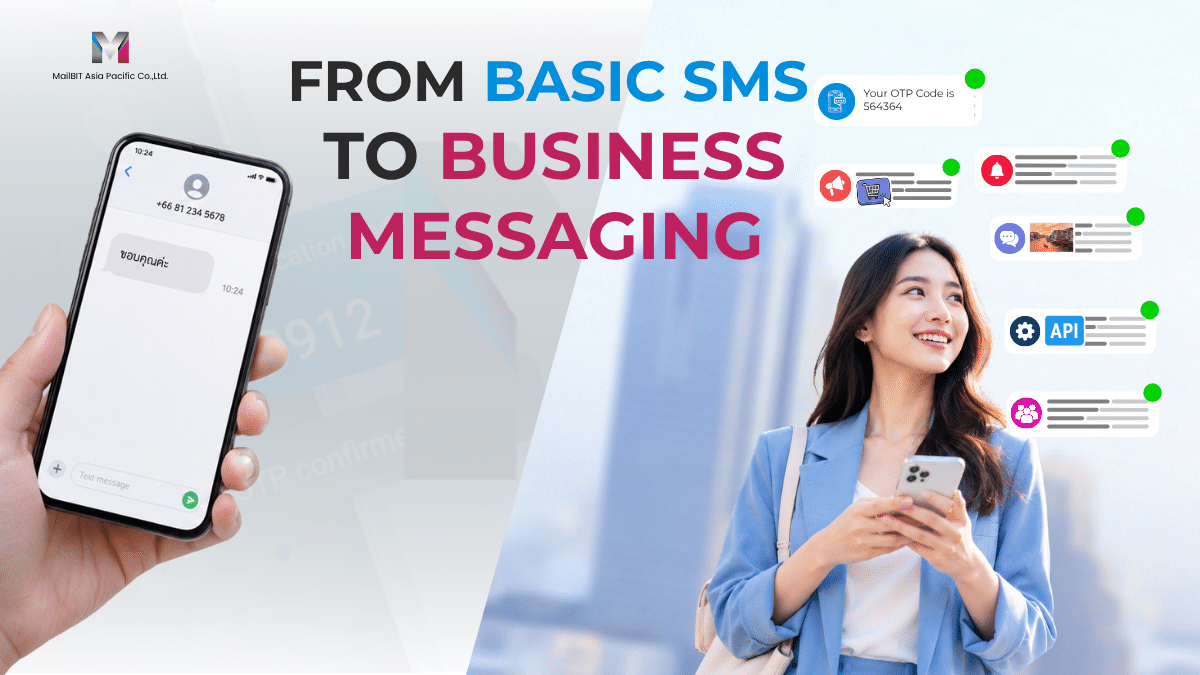
SMS has been part of business communication for decades. What started as a simple way to send short text messages has evolved into a powerful communication channel for businesses that need to connect with customers quickly, securely, and reliably.
Today, Business Messaging goes far beyond sending a basic SMS. Businesses can use SMS for customer notifications, OTP authentication, marketing campaigns, transaction alerts, appointment reminders, and automated communication through APIs.
With the right Cloud Messaging Provider, SMS can become an important part of the entire customer journey.
From Basic SMS to Business Messaging
Traditional SMS is simple: type a message, enter a phone number, and send.
Business Messaging takes this concept much further.
Modern businesses can connect their websites, applications, CRM systems, payment platforms, and other business systems directly to an SMS API, allowing messages to be triggered automatically based on customer actions.
For example:
- A customer registers → an OTP SMS is sent automatically.
- A customer places an order → an SMS Notification confirms the order.
- A payment is completed → a Transaction Alert is delivered.
- An appointment is approaching → an automated reminder is sent.
- A marketing campaign starts → Bulk SMS is delivered to the target audience.
- A system detects an important event → an automated System Notification is triggered.
This is the difference between simply sending SMS and building a complete Business Messaging strategy.
What Is Business Messaging?
Business Messaging refers to the use of messaging channels to communicate with customers throughout different stages of the customer journey.
For businesses, this can include SMS Marketing, SMS Notification, OTP SMS, transactional messages, alerts, reminders, and automated communications.
A reliable Business Messaging solution can help businesses connect their communication systems with customers’ mobile phones without requiring customers to install an additional application.
Because SMS works directly through mobile networks, it can be especially useful when businesses need a communication channel that is fast, direct, and accessible.
SMS API: Turning Messages Into Automation
One of the biggest changes from traditional SMS to modern Business Messaging is SMS API integration.
An SMS API allows a business system to communicate directly with an SMS platform.
For example, an e-commerce website can automatically send an SMS after an order is placed. A financial platform can send a transaction notification after a payment. A mobile application can send an OTP when a user logs in.
With SMS API Integration, businesses can automate communication without manually sending every message.
This can support:
- Website SMS
- Application SMS
- Automated SMS
- OTP authentication
- Transaction notifications
- Order confirmations
- Appointment reminders
- Delivery notifications
- Security alerts
- Customer notifications
OTP SMS for Secure Customer Authentication
Security is another important area where Business Messaging has transformed traditional SMS.
OTP SMS, or One-Time Password SMS, is commonly used to verify a customer’s identity during registration, login, payment, or other sensitive activities.
A business can integrate an OTP SMS service into its website or application so that a verification code is generated and delivered automatically.
For example:
Your verification code is 482931.
Please use this code to complete your registration.
This simple message can become part of a much larger automated authentication process.
Businesses in financial services, e-commerce, healthcare, telecommunications, online platforms, and other industries can use SMS OTP as part of their customer verification process.
SMS Notification Throughout the Customer Journey
Customers expect businesses to keep them informed.
This is where SMS Notification becomes valuable.
From registration to purchase and after-sales service, businesses can use SMS to provide timely updates.
A typical customer journey may include:
Registration → OTP → Order Confirmation → Payment Confirmation → Delivery Update → Appointment Reminder → After-Sales Notification
Each message provides useful information at the right moment.
A professional SMS Notification service can therefore become an important communication layer between a business and its customers.
SMS Marketing for Customer Engagement
Business Messaging is not limited to transactional communication.
Businesses can also use SMS Marketing to communicate promotions, campaigns, special offers, product launches, and customer updates.
For example:
Special offer! Enjoy exclusive benefits this weekend. Shop now and discover more.
Compared with traditional communication channels, SMS provides businesses with a direct way to reach customers through their mobile phones.
With a reliable SMS Marketing platform, businesses can manage campaigns, send messages to customer lists, and monitor delivery results.
Bulk SMS for Large-Scale Communication
When a business needs to communicate with thousands or even millions of customers, Bulk SMS can provide a scalable solution.
Businesses can use Bulk SMS services for:
- Marketing campaigns
- Customer announcements
- Service updates
- Event invitations
- Promotional campaigns
- Emergency notifications
- Membership communications
Instead of manually sending messages one by one, businesses can use an SMS platform to manage large-scale messaging more efficiently.
Sender ID and Brand Recognition
Another important part of Business Messaging is the Sender ID.
Instead of receiving a message from an unfamiliar phone number, customers can see a recognizable Alphanumeric Sender ID associated with the business.
For example:
MAILBIT: Your verification code is 482931.
A properly configured Sender Name can help businesses create a more recognizable communication experience while following applicable network and regulatory requirements.
Direct Route SMS and Reliable Delivery
For businesses, sending an SMS is not enough. The message also needs to reach the customer reliably.
This is why businesses should consider the quality of their SMS Gateway, routing, network connectivity, and delivery reporting.
A professional SMS Gateway can provide businesses with connectivity to mobile networks and delivery information that helps them monitor messaging performance.
For mission-critical messages such as OTP SMS, financial alerts, and transaction notifications, reliable messaging infrastructure can be especially important.
Cloud Messaging for Modern Businesses
As businesses move more operations online, Cloud Messaging has become increasingly important.
A Cloud Messaging Provider can provide the infrastructure required to connect business applications with messaging services.
Instead of building an entire messaging infrastructure internally, businesses can integrate messaging capabilities into their existing systems through APIs and cloud-based platforms.
This makes it possible to build automated communication workflows while keeping messaging connected to existing business processes.
Business Messaging Across Different Industries
Almost every industry can use Business Messaging.
Banking and Financial Services
Financial businesses can use SMS OTP, transaction alerts, payment notifications, and security messages.
E-Commerce
Online stores can use Order Confirmation SMS, payment notifications, delivery updates, and promotional SMS.
Healthcare
Healthcare providers can use Appointment Reminder SMS, patient notifications, and service updates.
Hospitality
Hotels and travel businesses can use booking confirmations, reservation updates, check-in reminders, and customer notifications.
Telecommunications
Telecom businesses can use service notifications, account alerts, OTP verification, and promotional campaigns.
Retail
Retail businesses can use SMS Marketing, promotions, membership notifications, and personalized customer communications.
Why Businesses Are Moving Beyond Basic SMS
The evolution from traditional SMS to Business Messaging is not simply about sending more messages.
It is about sending the right message, to the right customer, at the right moment, through an automated and reliable communication system.
Modern Business Messaging can help businesses connect:
Customer → Website → Application → API → SMS Platform → Mobile Network → Customer
This creates a communication ecosystem rather than a simple text message.
Choosing the Right SMS Provider
When choosing an SMS provider, businesses should consider more than price.
Important factors can include:
- SMS delivery reliability
- Direct network connectivity
- SMS API availability
- Delivery Reports
- Sender ID support
- OTP SMS capability
- Bulk SMS capability
- SMS Marketing features
- System integration
- Technical support
- Scalability
- Security
- Service-level support
A reliable SMS Provider should be able to support both everyday business communication and high-volume messaging requirements.
From SMS to a Complete Business Messaging Strategy
SMS may have started as a simple text message, but businesses can now use it as part of a much larger communication strategy.
From SMS API and OTP SMS to SMS Marketing, Bulk SMS, Transaction Alerts, System Notifications, and automated customer communication, messaging can become an integrated part of the digital customer journey.
The future of SMS is not simply about sending more messages.
It is about creating smarter, faster, and more connected Business Messaging experiences.
For businesses looking for a reliable messaging infrastructure, MailBIT Asia Pacific provides SMS Gateway, SMS API, OTP SMS, Bulk SMS, SMS Marketing, SMS Notification, and Cloud Messaging solutions for business communication.
From Basic SMS to Business Messaging — messaging is no longer just about sending a text. It is about connecting businesses with customers at every step of the journey.
📱 LINE: @MailBIT
📞 Tel: +66 2-237-7778 | +66 81-300-0958 (Bangkok/Thailand)
🌐 www.mailbit.co.th
#MailBIT #PromotionSMS #SMSMarketing #BulkSMS #SMSAPI #SMSGateway #BusinessSMS #DigitalMarketing #CustomerEngagement #EnterpriseSMS