English
 ไทย


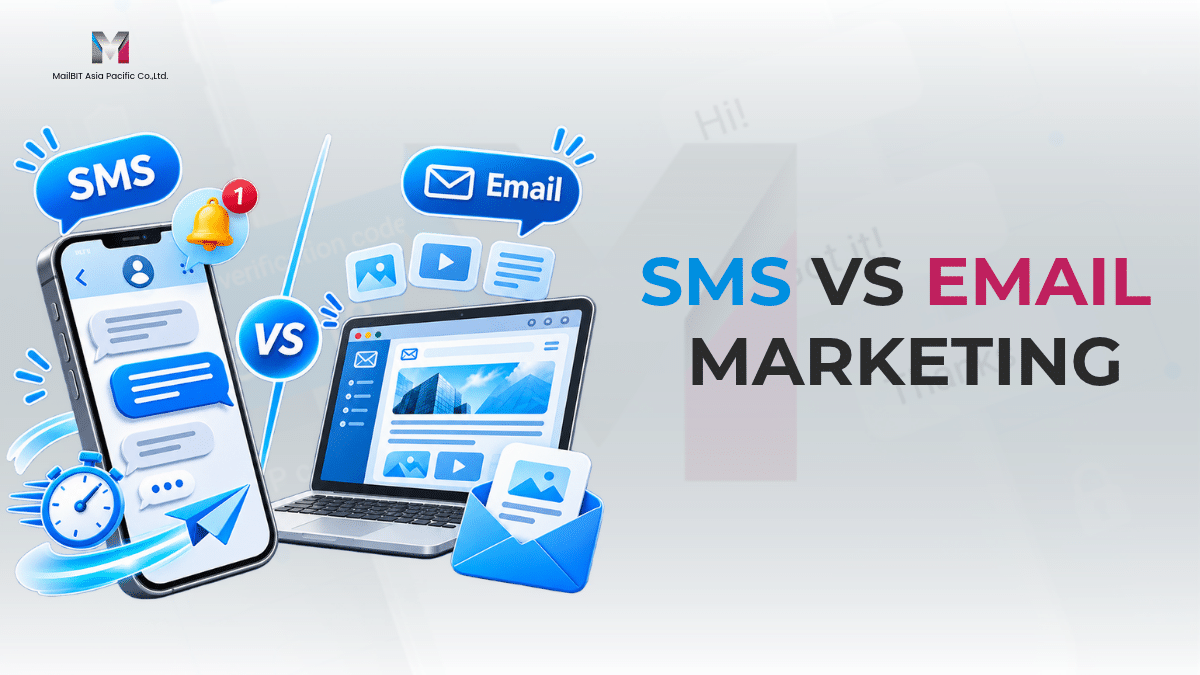
In today’s digital world, businesses have many ways to communicate with customers, including Facebook, LINE, email, and SMS. Choosing the right communication channel is an important part of building an effective marketing strategy.
Two commonly used channels are SMS Marketing and Email Marketing. Both allow businesses to send promotional offers, updates, and important information directly to customers, but each has different strengths and use cases.
SMS is particularly useful for short, direct messages, while email is better suited to longer content, visuals, and detailed product information.
Understanding these differences can help businesses decide when to use Business SMS Services and when Email Marketing may be a better choice.
1. What Is SMS Marketing?
SMS Marketing is the practice of sending promotional text messages, discounts, product announcements, and exclusive offers to customers who have agreed to receive marketing communications.
Businesses can use SMS Marketing Services to reach customers directly through their mobile phone numbers without requiring additional messaging applications.
Common uses of SMS Marketing include:
- Sending promotional offers and discounts
- Announcing flash sales
- Delivering discount coupons
- Promoting new products and services
- Sharing loyalty program benefits
- Sending reminders before promotions expire
Example SMS:
“Enjoy 20% off selected products until November 30. Visit our website for more details.”
For organizations that need to reach multiple recipients, Bulk SMS Services can help manage large-scale promotional campaigns through a centralized messaging platform.
Advantages of SMS Marketing
Direct Mobile Communication
SMS messages can be delivered directly to mobile phone numbers without requiring customers to install another application.
Short and Clear Messaging
SMS works well for concise communication, making it suitable for promotions, reminders, and important announcements.
Large-Scale Messaging
Businesses can use an Online SMS Sending Platform to organize messaging campaigns for multiple recipients.
Automated Messaging
With SMS API Integration, businesses can connect SMS delivery to websites, mobile applications, and internal systems.
Limitations of SMS Marketing
- SMS messages have character limits that depend on the encoding format.
- SMS is less suitable for long product descriptions or detailed visual content.
- Sending costs depend on message volume and destination.
- Businesses must follow applicable marketing consent and messaging regulations.
- Successful SMS delivery does not guarantee that every message will be read.
2. What Is Email Marketing?
Email Marketing is the use of email to communicate promotional information, product announcements, newsletters, and other business-related content.
Unlike SMS, email supports longer messages and more detailed layouts, including images, tables, and multiple links.
Common uses of Email Marketing include:
- Sending monthly newsletters
- Introducing new products and services
- Sharing product catalogs
- Publishing educational articles
- Inviting customers to events
- Delivering detailed promotional campaigns
Advantages of Email Marketing
Supports Detailed Content
Email allows businesses to explain products and services in greater detail.
Flexible Design Options
Businesses can create branded email templates using images, layouts, and call-to-action buttons.
Suitable for Long-Term Customer Relationships
Newsletters and educational content can help businesses maintain communication with subscribers over time.
Campaign Performance Tracking
Many Email Marketing platforms provide reporting tools for link clicks and conversions. Open-rate measurements may be less reliable because of email privacy protection features.
Limitations of Email Marketing
- Recipients generally need an internet connection to access email.
- Messages may be filtered into spam or promotional folders.
- Longer emails can require more time to read.
- Email templates need testing across different devices and email clients.
- Businesses must maintain clean subscriber lists and follow consent requirements.
3. SMS Marketing vs. Email Marketing: Key Differences
Although both channels support direct customer communication, their features and applications differ.
| Comparison | SMS Marketing | Email Marketing |
|---|---|---|
| Delivery Channel | Mobile phone numbers | Email addresses |
| Content Format | Short text messages | Long-form text, images, and HTML content |
| Internet Required to Receive | No, for standard SMS | Generally yes |
| Best Use Cases | Promotions, alerts, reminders, and concise updates | Newsletters, detailed offers, and educational content |
| Cost Structure | Often based on message volume and destination | Depends on platform and sending volume |
| Automation | SMS API integration | Email automation platforms and APIs |
| Performance Tracking | Delivery reports, tracked links, and conversions | Link clicks, conversions, and limited open-rate data |
Both channels have advantages, and businesses do not necessarily need to choose only one.
4. When Should Businesses Use SMS Marketing?
SMS Marketing is particularly suitable when businesses need to deliver short, relevant information to customers’ mobile phones.
Time-Sensitive Promotions
For example, an e-commerce business may want to announce a flash sale or remind subscribers about a promotion that is ending soon.
Using Promotional SMS Services allows businesses to share these offers with customers who have agreed to receive marketing messages.
Important Customer Notifications
SMS can also be used for order confirmations, payment updates, appointment reminders, and other essential notifications.
Businesses can connect these workflows through an SMS Gateway to support automated messaging.
Large-Scale Customer Communication
For organizations with extensive customer databases, Bulk SMS for Businesses provides a way to manage messages for multiple recipients without sending each message individually.
However, businesses should segment their audiences appropriately and avoid excessive promotional messaging.
5. When Should Businesses Use Email Marketing?
Email Marketing is more suitable when businesses need to provide detailed information or visually rich content.
Newsletters
Businesses can share industry updates, educational articles, and company announcements with subscribers.
Product and Service Introductions
Email allows companies to include product images, specifications, descriptions, and multiple links in a single message.
B2B Marketing
For organizations targeting business decision-makers, email is useful for sharing service presentations, proposals, and other detailed information.
Customer Relationship Building
Relevant newsletters and educational content can help maintain ongoing communication with customers.
6. Can SMS and Email Marketing Work Together?
Yes. In many situations, combining SMS and Email Marketing can be more effective than relying on only one channel.
Businesses can assign different roles to each communication method based on their customers’ needs.
Example: An E-commerce Marketing Campaign
Step 1: Send an email introducing a new product collection, including images and detailed promotional information.
Step 2: Send a short SMS announcement to customers who have opted in to receive promotional text messages.
Step 3: Once a customer places an order, automatically send an SMS order confirmation.
Step 4: Send a follow-up email with detailed purchase information and relevant service updates.
This approach allows SMS to handle concise notifications while email provides more comprehensive information.
Businesses can also use an Automated SMS API to integrate text messaging into their existing websites and applications.
7. Five Tips for Effective SMS and Email Marketing
1. Choose the Right Channel for Each Message
Use SMS for short promotional announcements, reminders, and notifications.
Use email when customers need detailed descriptions, product images, or longer educational content.
2. Segment Your Customer Audience
Avoid sending identical messages to every customer without considering their interests or communication preferences.
Customer segmentation helps businesses create more relevant campaigns.
3. Schedule Messages Appropriately
Consider when customers are likely to find the message useful and have time to respond.
For promotional SMS campaigns, avoid sending messages during inconvenient hours.
4. Include a Clear Call to Action
Whether using SMS or email, make it clear what customers should do next.
Examples include:
- Explore the promotion
- Redeem a discount
- Confirm an appointment
- Contact customer support
- Visit the online store
5. Measure and Improve Campaign Performance
Track results that align with your objectives, such as link clicks, coupon redemptions, and completed purchases.
Businesses exploring SMS Marketing Solutions should consider how campaign reporting and tracked links can support performance analysis.
8. Why Choose MailBIT for SMS Marketing?
For organizations looking to integrate SMS into their marketing and customer communication strategies, MailBIT Asia Pacific provides business messaging solutions for different operational requirements.
MailBIT’s SMS Services include:
- SMS Marketing: Deliver promotions and marketing announcements.
- Bulk SMS: Send messages to multiple recipients through a centralized platform.
- SMS OTP: Deliver one-time verification codes.
- SMS Notifications: Send important customer alerts and reminders.
- SMS API: Connect automated messaging to websites and business applications.
Businesses can explore MailBIT Business SMS Services to identify suitable messaging solutions for their customer communication needs.
Whether you’re managing promotional campaigns, customer notifications, or automated messaging, MailBIT offers SMS services that can support your business operations.
9. Frequently Asked Questions About SMS vs. Email Marketing
What is the main difference between SMS Marketing and Email Marketing?
SMS Marketing uses mobile phone numbers to deliver short text messages, while Email Marketing uses email addresses to send longer messages that can include images, detailed information, and HTML layouts.
Is SMS Marketing better than Email Marketing?
Neither channel is universally better.
The most suitable option depends on campaign objectives, audience preferences, message content, and communication requirements.
What types of businesses benefit from SMS Marketing?
SMS Marketing can be useful for e-commerce, retail, healthcare, financial services, and service businesses.
Common applications include promotions, appointment reminders, and customer notifications.
Can businesses use SMS and Email Marketing together?
Yes. Businesses can use email for detailed promotional content and SMS for concise notifications or reminders, provided they follow applicable consent and messaging requirements.
Can SMS Marketing increase sales?
SMS Marketing can create opportunities for customer engagement and repeat purchases.
However, actual results depend on campaign quality, audience targeting, offer relevance, and execution. Increased sales cannot be guaranteed.
How can businesses send promotional SMS to multiple customers?
Businesses can use a Bulk SMS Service to manage messages for large customer groups through a centralized platform.
Before sending promotional campaigns, businesses should verify their subscriber lists and ensure they have the necessary permission to contact recipients.
Conclusion: SMS vs. Email Marketing — Which Should Your Business Choose?
Both SMS Marketing and Email Marketing offer valuable advantages for customer communication.
SMS is particularly useful for concise information, promotional alerts, and timely notifications.
Email is better suited to detailed product descriptions, newsletters, educational articles, and visually rich campaigns.
By combining these communication methods strategically, businesses can reach customers through the channels most appropriate for each message.
Improve Customer Communication with MailBIT.
If you’re looking for a Business SMS Provider or exploring SMS Marketing and Bulk SMS Solutions, contact MailBIT to discuss your business messaging requirements.
Contact MailBIT Asia Pacific
Interested in SMS Marketing, Bulk SMS, SMS OTP, or SMS API Services?
Contact the MailBIT team for more information.
📱 LINE: @MailBIT
📞 Tel: 02-237-7778 | 081-300-0958 (Bangkok, Thailand)
🌐 Website: www.mailbit.co.th
Make customer communication more effective with MailBIT SMS Solutions.
#MailBIT #SMSMarketing #EmailMarketing #BulkSMS #DigitalMarketing