English
 ไทย


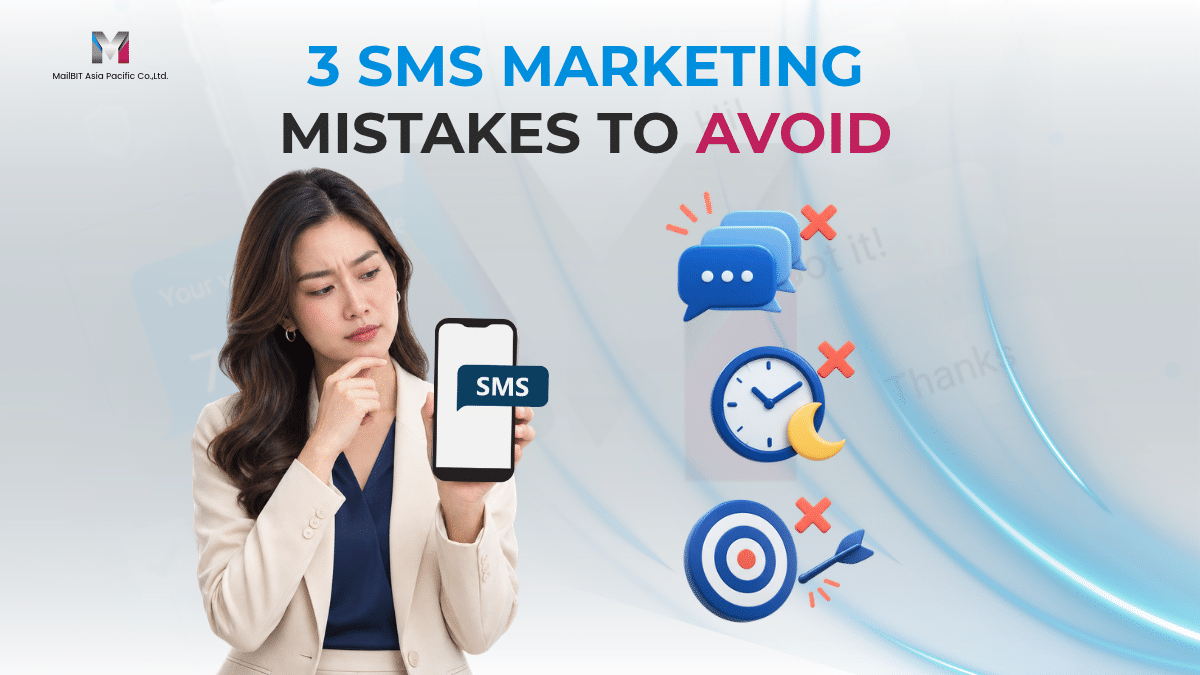
A customer receives a discount code in the morning, then gets the same offer again that afternoon. Another customer gets a first-order discount a day after making their first purchase. Both are easy mistakes to make when campaigns overlap or recipient lists are out of date.
Before using a business SMS service to send your next promotion, check three things: how often you text, when you send, and who’s on the list.
1. Sending SMS Too Often
The same customer can appear on several lists, such as new subscribers, loyalty members, and past promotion shoppers. When teams send campaigns from separate lists, one person may receive several messages in a single day.
How to avoid it: Keep one sending calendar across teams, remove duplicate phone numbers, and count how many promotional texts each customer receives across campaigns. Before sending a reminder, remove customers who have already redeemed the offer.
Example: Send a launch message to subscribers on day one. On the final day, send a reminder only to customers who haven’t used the code and are still subscribed. This is especially useful when you send bulk SMS to several customer groups.
2. Sending SMS at the Wrong Time
A lunch offer that arrives after the lunch break gives customers little reason to act. The same goes for a discount that lands minutes before it expires. Give customers enough time to read the message, decide, and use the offer.
How to avoid it: Test two sending times with small, comparable groups. Keep the message and offer the same, then compare results such as coupon redemptions or completed orders.
Example: A restaurant could test sending a lunch offer at 10:30 a.m. and 11:30 a.m. An online store could test sending a promotion the day before it starts or on launch morning. Use those results to choose when to send your next campaign through a web-based SMS platform.
3. Sending SMS to the Wrong Audience
A first-order discount is relevant to subscribers who haven’t bought anything yet. Returning customers may be more interested in a loyalty offer, a product they’ve bought before, or a promotion at their usual store.
How to avoid it: Segment subscribers using information your business has permission to use, such as purchase history, membership status, or preferred store. Check that everyone on each list qualifies for the offer before sending.
| Customer segment | Example SMS offer |
|---|---|
| New subscribers who haven’t placed an order | A discount on their first purchase |
| Customers who bought from the same product category | A promotion on a complementary item or a back-in-stock update |
| Customers who regularly shop at a specific store | An offer valid at their usual location |
When using Bulk SMS for businesses, prepare a separate recipient list and message for each segment. Before sending, check that the offer, promo code, expiry date, and participating locations match the intended audience.
A Quick Checklist Before You Send
- Frequency: How many promotional texts has this group already received? Is another campaign scheduled for the same day?
- Timing: Will customers have enough time to read the message and use the offer?
- Audience: Is everyone on the list subscribed to marketing messages and eligible for the offer?
- Message: Can customers tell who sent it, what they’ll get, when it expires, and what to do next?
Frequently Asked Questions About SMS Marketing
How often should a business send promotional SMS?
Start with a frequency that fits the offer and what customers expect when they subscribe. Track coupon redemptions and opt-outs as you adjust. If you add a reminder, give customers a clear reason to receive it, such as an upcoming deadline for an offer they haven’t used.
What is the best time to send a promotional SMS?
Choose a time when customers can act on the offer. A restaurant can test sending before lunch, while a retailer might send a few days before an in-store event. Use your own campaign results to refine the timing.
How do you measure an SMS marketing campaign?
Choose a metric that matches the goal, such as coupon redemptions for a sale or bookings for a restaurant promotion. If you’re testing multiple sending times or customer groups, give each group its own promo code so you can attribute results.
Plan Your Next SMS Marketing Campaign with MailBIT
Start with one audience, one offer, and one result you can measure. For example, send a first-purchase discount to new subscribers and track how many use the code. That gives your team a baseline for adjusting the audience, timing, or offer in the next campaign.
Explore SMS marketing and A2P messaging services or contact MailBIT to discuss your next campaign.
📱 LINE @MailBIT
📞 Phone 02-237-7778 or 081-300-0958 (Bangkok, Thailand)
🌐 Website www.mailbit.co.th
#MailBIT #SMSMarketing #BulkSMS #PromotionalSMS #BusinessSMS