English
  ไทย
ไทย 

In today’s digital communication landscape, SMS remains one of the most trusted and widely used channels for business messaging. From OTP verification to transaction alerts, companies rely on SMS to deliver important information to their customers quickly and reliably.
However, with the growing use of SMS communication, cyber threats such as SMS Spoofing have also become more common. Businesses must understand how this threat works and how to protect their customers and brand reputation.
What is SMS Spoofing?
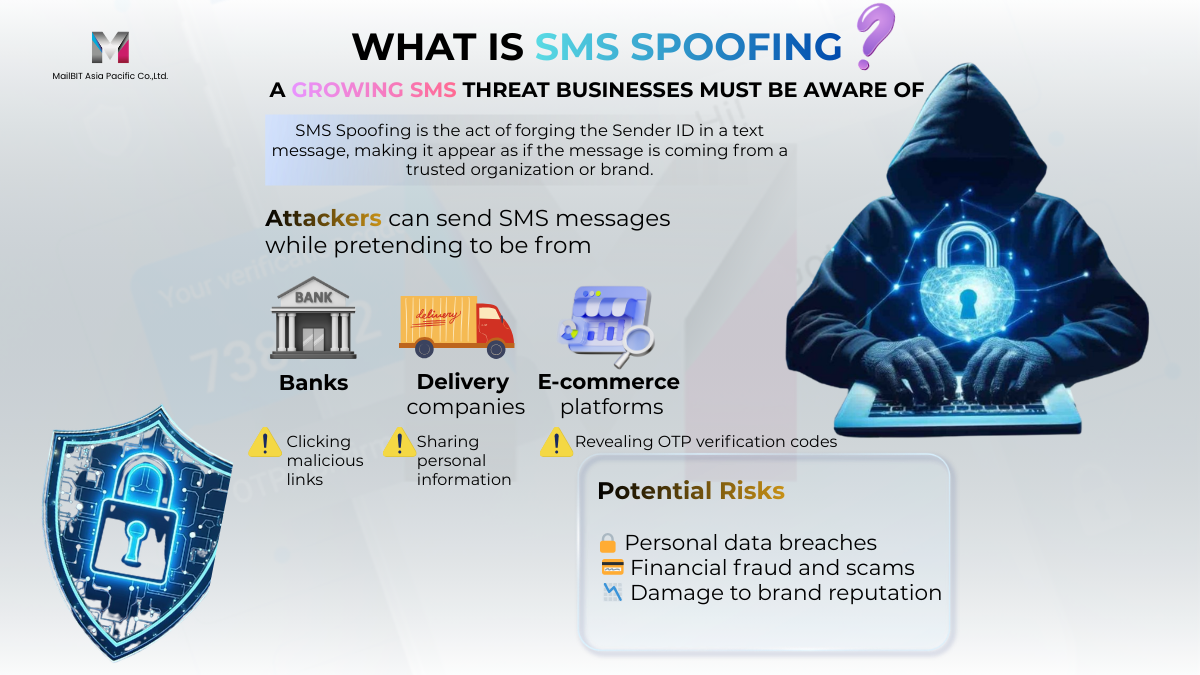
SMS Spoofing is a type of cyberattack where a sender falsifies the Sender ID of a text message to make it appear as though the message is coming from a legitimate organization.
For example, attackers may disguise their messages to look like they are sent from:
- Banks or financial institutions
- Delivery service companies
- E-commerce platforms
- Digital service providers
Because the message appears to come from a trusted source, recipients are more likely to trust the message and follow the instructions provided.
How SMS Spoofing Attacks Work
Cybercriminals typically use SMS Spoofing to trick users into performing actions that compromise their personal or financial information. These messages often include urgent requests or warnings designed to create panic or immediate response.
Common tactics include:
- Asking users to click a malicious phishing link
- Requesting sensitive personal information
- Asking customers to share OTP verification codes
- Redirecting users to fake login pages
Once victims interact with these messages, attackers may gain access to personal data, bank accounts, or authentication credentials.
The Risks of SMS Spoofing for Businesses
SMS spoofing does not only affect individuals—it can also cause serious damage to businesses and organizations.
Data Privacy Risks
If customers fall victim to spoofed messages, their personal information may be exposed or stolen.
Financial Fraud
Attackers may use spoofed SMS messages to gain access to banking accounts or conduct fraudulent transactions.
Brand Reputation Damage
When scammers impersonate a legitimate brand, customers may lose trust in that company’s communication channels.
Why SMS Security Matters for Modern Businesses
Businesses that rely on SMS messaging for customer communication—especially OTP authentication and transaction notifications—must ensure their messaging infrastructure is secure.
Industries particularly vulnerable to SMS spoofing include:
- Banking and financial services
- Fintech platforms
- E-commerce businesses
- Digital service providers
- Enterprise technology companies
Using a reliable messaging infrastructure can significantly reduce the risk of spoofing attacks.
How Businesses Can Prevent SMS Spoofing
To protect both customers and brand reputation, organizations should implement several security measures in their SMS communication systems.
Use a Trusted SMS Gateway
Working with a professional messaging provider ensures messages are delivered through secure and verified channels.
Implement Direct Operator Connections
A Direct Operator Connection allows messages to be routed directly through telecom operators, reducing the possibility of message manipulation.
Enable Sender ID Protection
Sender ID protection helps prevent unauthorized parties from impersonating your brand in SMS communications.
Secure OTP Authentication Systems
Using secure OTP SMS verification systems ensures that authentication messages remain protected from spoofing attacks.
The Importance of Secure Messaging Infrastructure
As cyber threats continue to evolve, businesses must prioritize secure communication channels. SMS remains a powerful and reliable communication tool, but it must be supported by secure messaging infrastructure to protect both businesses and their customers.
By understanding the risks of SMS spoofing and implementing proper security measures, organizations can maintain trust, prevent fraud, and ensure their messaging systems remain reliable.
Conclusion
SMS spoofing is a growing cybersecurity concern that businesses cannot ignore. Attackers who impersonate trusted brands through spoofed SMS messages can cause financial losses, compromise customer data, and damage brand reputation.
Organizations that rely on SMS communication should invest in secure SMS infrastructure, trusted SMS gateway providers, and enterprise messaging platforms to ensure safe and reliable messaging.
A secure messaging strategy helps businesses protect their customers while maintaining the integrity of their communication channels.
📱 LINE: @MailBIT
📞 Tel: +66 2-237-7778 | +66 81-300-0958 (Bangkok, Thailand)
#SMSSpoofing #SMSFraud #CyberSecurity #SMSGateway #OTPSecurity #A2PMessaging #BusinessSMS #CloudMessaging #FintechSecurity #DigitalSecurity #EnterpriseMessaging #SMSMarketing #MailBIT